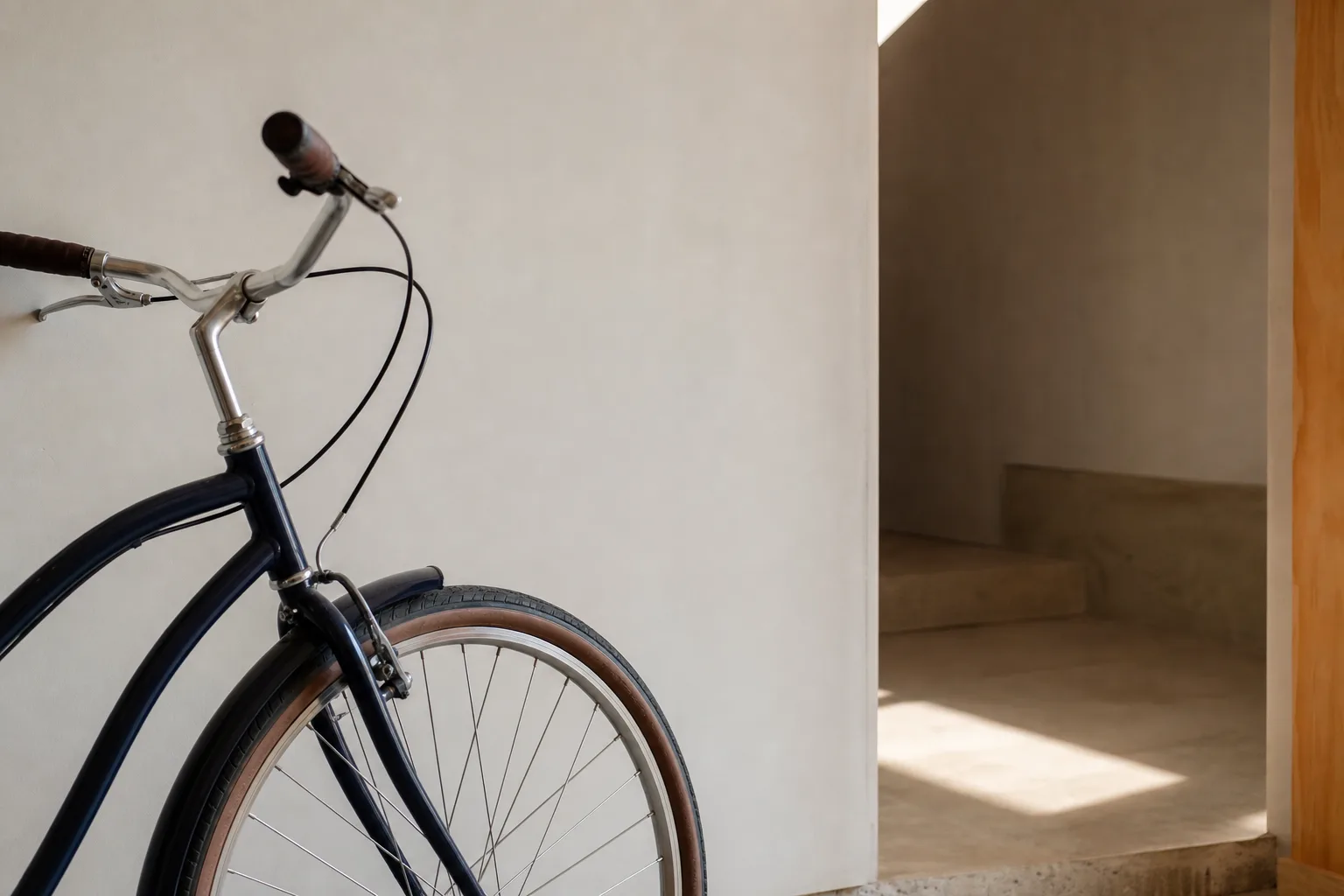
Buying a cruiser in a box? What you still have to do, and what it costs to keep riding
A boxed cruiser arrives partly built and priced accordingly; here is what the carton leaves for you, which tools that takes, and where the money goes afterward.
Pedal thread direction. The left pedal has a left-hand thread and tightens counterclockwise. Forcing it the usual way strips soft aluminum crank threads almost immediately, and the repair means a new crank arm or a thread insert.
Loose in the box. Expect the front wheel, handlebar, pedals, seatpost and often the reflectors to ship unattached or untorqued. Each of those is a joint that carries load, so none of them is a cosmetic step.
Torque, not feel. Stem and seatpost clamps on cruisers are frequently steel bolts into aluminum parts, where overtightening cracks the component. A basic torque wrench covering roughly five to twenty newton meters handles nearly every fastener on the bike.
A cruiser sold in a carton arrives most of the way built, and the part left undone is not random. The manufacturer stops at the point where the remaining work fits in a flat box: front wheel out, handlebar rotated or loose, pedals in a plastic bag, seatpost dropped low, brakes connected but not adjusted. Every one of those steps is a safety-critical joint. A careful reader checks which ones the listing quietly hands over, because the difference between a boxed price and a shop price is mostly the labor and the judgment attached to those five items.
One. Read the carton contents before the price
Good listings state what ships loose and what ships torqued. Vague ones say the bike is largely assembled and leave the percentage undefined, which is a marketing number rather than a mechanical one. Look for whether the crank and bottom bracket are factory-installed, whether the rear wheel is dished and tensioned, and whether the coaster brake arm is already clamped to the chainstay. If the description does not say, assume it needs checking anyway. The Consumer Product Safety Commission oversees federal safety requirements for bicycles sold in the United States, including how a bike must be delivered and what assembly instructions accompany it.
Two. The tools that decide whether you assemble it yourself
Pedals need a fifteen-millimeter pedal wrench or an eight-millimeter hex key with real leverage, and they thread in opposite directions, so a reversed left pedal strips aluminum crank threads in about two turns. A torque wrench matters at the stem and seatpost clamp, where cruiser hardware is often steel into aluminum and overtightening is the common failure. Then a cable cutter that shears rather than crushes, a spoke wrench for the wheel that shifted in transit, and a chain tool if the chain arrived long. Most households own none of these.
Three. What a shop build actually buys
Assembly at a local shop is usually quoted as a flat labor charge, and the honest version of that charge covers more than turning fasteners. It covers truing both wheels under tension, setting hub cone preload, checking that the coaster brake engages within a quarter pedal stroke, seating the tires evenly on the bead, and torquing the crank bolts after a short shakedown. Ask what the quote includes and whether a follow-up adjustment is part of it. A shop that will name each step is telling you where the money goes, which is exactly what the carton does not.
Four. Wide tires cost more and last longer than you expect
Cruiser tires run wide, commonly balloon sizes on twenty-six-inch or twenty-four-inch rims, and that width is both the comfort and the running cost. Fewer retailers stock those sizes, so replacements are ordered rather than grabbed, and the cream or whitewall versions carry a premium over plain black for the same casing. Against that, the low pressures and heavy tread mean a rider covering short distances may go several seasons before the sidewalls, not the tread, decide the matter. Check the size printed on the sidewall before you buy the bike, then check what it costs to replace.
Five. Hubs, saddles and grips, the parts you touch every ride
Coaster and internally geared hubs are sealed enough to ignore and simple enough to service, but they do want attention: fresh grease and cone adjustment at intervals measured in years for light use, and a shop visit rather than a driveway job, since opening one requires holding small parts in order. Budget separately for the contact points. Stock saddles and grips on inexpensive cruisers are chosen to look right in a photograph, and a rider who swaps to a sprung saddle with the correct rail width, or to grips sized to their hands, usually finds the second mile stops being the problem it was.
The useful comparison is not boxed against shop-built as categories, but a specific carton against a specific quote, with the tool purchases and the first round of part swaps written into both columns. Do that arithmetic before the order goes through, and the bike that arrives is the one you expected.